A six-week doctor-supervised weight loss program for the working adult who is 30 pounds past their fighting weight.
Genesis Fit is the corporate version of the program Dr. McCarley has run inside Genesis Family Chiropractic for years. Weekly 1:1 consultations, body composition tracking, ChiroThin nutritional support, structured re-feeding for durability. Available to your team as a sponsored benefit, a partial subsidy, or an HSA-eligible self-pay option.
The 40 pounds your bookkeeper gained since the office moved to a sit-down workflow is showing up on your benefits invoice.
Weight loss is usually framed as a personal health story. For an employer, it's a different conversation. It's the slow rise in your medical-renewal quote. It's the 11 a.m. crash on the manufacturing floor. The cost is real, even if it never shows up on a single line item.
Pre-diabetic employees alone run roughly $9,600 a year, each.
The CDC and the American Diabetes Association have both put the all-in cost of pre-diabetes per employee at roughly $9,600 a year when you account for medical claims, lost productivity, and absenteeism. The U.S. has more than 96 million adults in the pre-diabetic window right now. On a 30-person payroll, the statistical likelihood is that 10 of them are in it.
Presenteeism gets worse the heavier the team gets.
The Integrated Benefits Institute has consistently shown excess weight is one of the largest drivers of presenteeism (showing up but operating at 60 percent). The 47-year-old superintendent 30 pounds above his fighting weight isn't out sick. He's on the job, slower, sorer, more likely to make the small mistakes that compound into rework. That's a productivity tax you can't see on a time card.
The owner who lost his dad at 58 doesn't want that for his crew.
A real reason owners write the check for Genesis Fit, the one that doesn't show up in any cost model: they watched a father, an uncle, a brother go down early. They know the trade does this. Genesis Fit is the thing they wish someone had pulled their dad into at 50.
Six weeks of structure, one re-feeding phase, one doctor in the room every step.
Doctor-supervised from day zero. Dr. McCarley personally pre-screens every participant, runs every weekly check-in, and signs off on the re-feeding transition. No app loop, no chatbot coach, no honor-system weigh-ins.
Week 0 · Medical pre-screen
Before a participant is enrolled, Dr. McCarley conducts a pre-screen consult. Medical history, current medications, blood pressure, weight, BMI, body measurements, and goal-setting. Anyone with a disqualifying condition is told before they pay, not after.
Weeks 1 through 6 · The protocol
Weekly 1:1 with Dr. McCarley (in-person at Genesis Family Chiropractic in Noblesville, or via secure video). Each visit: weight, body composition, blood pressure, accountability check-in, protocol adjustment if needed. Participants follow a carefully portioned, nutrient-dense meal framework alongside the ChiroThin nutritional support formula.
Week 7 onward · Re-feeding phase
The reason most short-program weight loss boomerangs is the back end, not the front end. Week 7 begins a structured re-feeding phase: a gradual reintroduction of broader food groups in a controlled order, with a final check-in to set the sustainable maintenance pattern.
Everything a serious six-week reset requires, in one bundle.
No upsells, no a-la-carte tier menu, no "premium coaching add-on." A single per-participant fee covers the full six weeks plus the re-feeding support. Here's what that includes, in plain language.
- Weekly 1:1 with Dr. McCarley. In-person at the Noblesville office or secure video. Same doctor every week, not a rotating coaching staff.
- Body composition tracking. Weight, BMI, and body measurements (waist, hip, chest, arm, thigh) re-taken weekly so participants see progress the scale alone doesn't always reflect.
- Blood pressure monitoring. Standard cuff reading at every visit. Useful trend data, and when needed, a flag routed to the participant's primary care.
- ChiroThin nutritional support. A proprietary formula made in the U.S. with 100 percent U.S.-sourced ingredients. Contains amino acids and botanicals that aid fatty acid transportation, fatty acid metabolism, blood sugar stabilization, metabolism, and detoxification.
- Meal portion guidance. A clear, structured meal framework focused on carefully portioned, nutrient-dense food. Not a meal-delivery service. Participants shop and prepare their own food on a framework Dr. McCarley walks them through in week zero.
- Accountability check-ins. The weekly 1:1 is the accountability. Missing two weeks in a row is a yellow flag and a phone call from the doctor.
- Structured re-feeding support. A defined post-program transition (typically 2-4 weeks of additional check-in cadence) so the result holds past week six.
- Doctor access during the program. Participants can reach Dr. McCarley between weekly visits if something comes up. Medication question, unexpected reaction, plateau. He answers.
The honest fit list, because the wrong participant is worse than no participant.
A six-week structured program isn't the right answer for everyone. About one in eight pre-screen consults end in a redirect to a different type of care, and we'd rather have that conversation before a participant pays than mid-protocol.
Genesis Fit works well for:
- Working adults 15 to 50 pounds above their healthy baseline.
- Anyone willing to commit to six weeks of structured eating and a weekly check-in.
- Participants with no acute medical conditions that disqualify them (uncontrolled diabetes, recent cardiac events, active eating disorders, pregnancy or breastfeeding).
- The "I've tried everything on my own and it hasn't held" profile. Structure and weekly accountability are what most self-directed attempts are missing.
Genesis Fit is not a fit for:
- Anyone needing inpatient eating disorder care. We refer out, every time.
- Participants with an active GLP-1 prescription needing oversight outside our scope. Their prescribing doctor runs that program. We coordinate, we don't replace.
- Anyone unwilling to commit to a six-week window. The protocol depends on the structure. Halfway in is worse than not in.
- Participants seeking a 30-day quick fix or a January reset. Six weeks plus re-feeding is the design and we don't shorten it.
Said plainly, so no one signs up expecting the wrong thing.
Not GLP-1 / semaglutide
Genesis Fit is not Ozempic, Wegovy, Mounjaro, or Zepbound. No injectable medication in the protocol. If a participant is on one and needs oversight of it, their prescriber owns that.
Not inpatient
Participants live their lives, eat in their own kitchens, work their own shifts, and come in once a week. Built for working adults, not residential weight loss settings.
Not a 30-day reset
The protocol is six weeks plus structured re-feeding, full stop. We don't shrink it for January or stretch it for a discount. The structure is the product.
Not a meal-delivery service
No boxes shipped to a participant's door. Participants shop and prepare their own food on a printed framework. The portion guidance is the structure. The accountability is the doctor.
How an employer layers Genesis Fit into the team.
The standard rollout is the same regardless of who's paying: a brief enrollment window for interested employees, a group pre-screen consult Dr. McCarley conducts on-site or at the Noblesville office, then weekly 1:1 check-ins for everyone cleared to enroll. What changes is the payment arrangement. Below are the three most common.
1. Employer-sponsored
The employer pays the full per-participant fee. Genesis Fit becomes a covered benefit. Cleanest model for owners who already invest in their crew's health and want a structured option employees can opt into without an out-of-pocket conversation.
2. Partial subsidy
The employer covers a portion (often half or two-thirds), the employee covers the rest. Participants who put their own dollars in tend to complete the program at higher rates.
3. HSA/FSA self-pay (employer access)
The employer doesn't write the check, but they introduce the program and Dr. McCarley runs pre-screen consults on-site or via video. Employees enroll directly and use HSA or FSA dollars. Lowest cost for the employer, highest reach.
Pricing posture
Per-participant pricing typically lands between $497 and $697 for the full six weeks plus re-feeding support. Cohort size, employer arrangement, and bundling with corporate chiropractic all move the number. The fit call is where we put the actual figure on paper for your roster.
Questions every employer asks before they introduce this to the team.
What is ChiroThin, exactly?
ChiroThin is a proprietary nutritional support formula used inside doctor-supervised weight loss programs. It's manufactured in the U.S. with 100 percent U.S.-sourced ingredients. The formula contains amino acids and botanicals that aid fatty acid transportation, fatty acid metabolism, blood sugar stabilization, metabolism, and detoxification. It is nutritional support, not a pharmaceutical, not a stimulant, not a hormone. It's one component of Genesis Fit, not the entire program.
Is this safe with my employee's existing medications?
The week zero pre-screen exists specifically to answer that question. Every prospective participant brings their full medication list and Dr. McCarley reviews it against the protocol. Categories that need a closer look: blood pressure medications, blood thinners, diabetes medications, and anything in the GLP-1 family. A pre-screen "not now" is a real outcome, not a paperwork formality.
What's the expected weight loss?
ChiroThin's manufacturer publishes typical results in the range of 20 to 30 pounds over the six-week protocol for participants under doctor supervision who complete the program as designed. We've seen results inside that range in our own practice, and also below it (10 to 15 pounds) or above it. The honest answer is it depends on the starting point, the adherence, and whether the participant shows up to every weekly 1:1. We don't promise a number. We promise a protocol with a doctor in the room for it.
What happens after week 6? Doesn't everyone just gain it back?
That's the real risk in any short-program weight loss model, and it's why the re-feeding phase is built into Genesis Fit and not sold as an upsell. Starting in week seven, participants enter a structured reintroduction of broader food groups in a controlled order, with continued check-in cadence (typically two to four weeks). The program is designed to end with a participant who knows how to eat for the rest of their year, not just for six weeks.
Can my employees use HSA or FSA dollars for this?
In most cases, yes. Doctor-supervised weight loss is typically HSA and FSA-eligible when there's documented medical need (BMI threshold, comorbid condition, or doctor recommendation). Dr. McCarley provides participants with a receipt and a brief letter of medical necessity where appropriate. Final eligibility depends on the participant's specific plan, so we recommend they verify with their plan administrator before enrolling.
What's your refund policy if a participant has to drop out for medical reasons?
If a participant withdraws inside the first week for a documented medical reason (new diagnosis, unexpected procedure, medication change that conflicts with the protocol), the per-participant fee is refunded in full minus the pre-screen consult fee. Between weeks two and four, a prorated refund applies. After week four, the program is considered substantially delivered and is non-refundable. Voluntary withdrawal is non-refundable from week one forward. We tell every participant this before they sign.
Do we, as the employer, see individual medical data?
No. Individual weight, body composition, blood pressure, and medical history is private between the participant and Dr. McCarley. The employer receives a roster-level participation summary (who enrolled, who completed, attendance rate) so they can see whether the program is being used. No individual data, ever. That's a non-negotiable, and it's the reason employees feel safe enrolling through an employer channel in the first place.
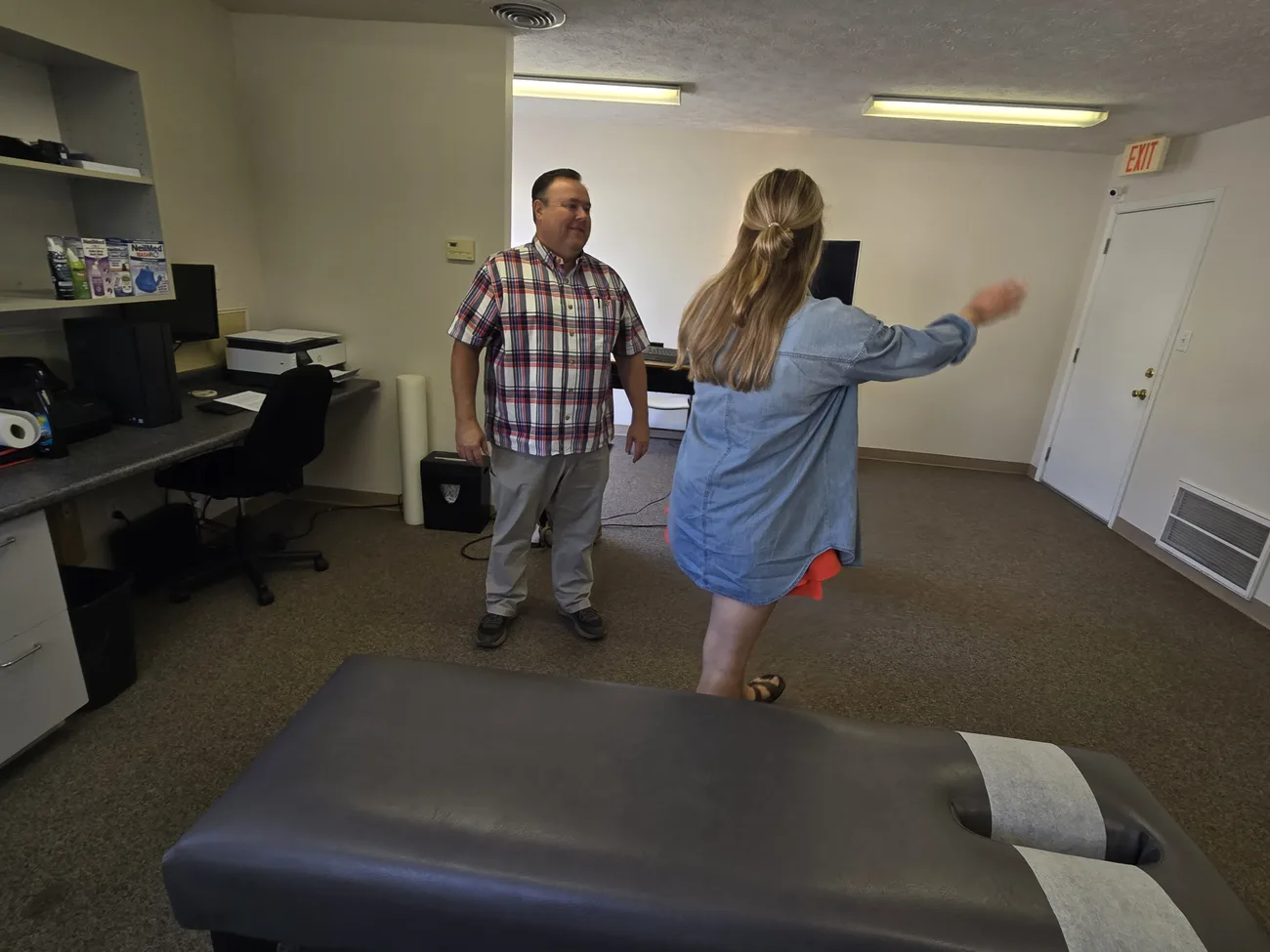
A six-week reset, doctor-supervised.
Weekly one-on-one consultations, body-composition tracking, and a proprietary nutritional protocol, with structured re-feeding so the results hold past week seven.
Built for the team member who is serious about resetting, supported by the same provider every step.